
Walk into any bar in Marseille during a Ligue 1 weekend and you will hear something that sounds less like fan chatter and more like a trading floor. Supporters argue over expected goals, injury reports, and referee tendencies with the same seriousness a broker gives to earnings calls. What used to be pure emotion has quietly turned into a collective forecasting exercise, and nobody planned it that way.
That shift did not happen in isolation. Fans comparing notes on lineups and form curves lean on outside references to sharpen their reasoning, and one name that keeps surfacing in these conversations is slimking, cited less as a tip sheet and more as a source people trust for a second opinion grounded in data rather than gut feeling. Its role is small in any single conversation, but it shows how fandom has absorbed habits once reserved for analysts.
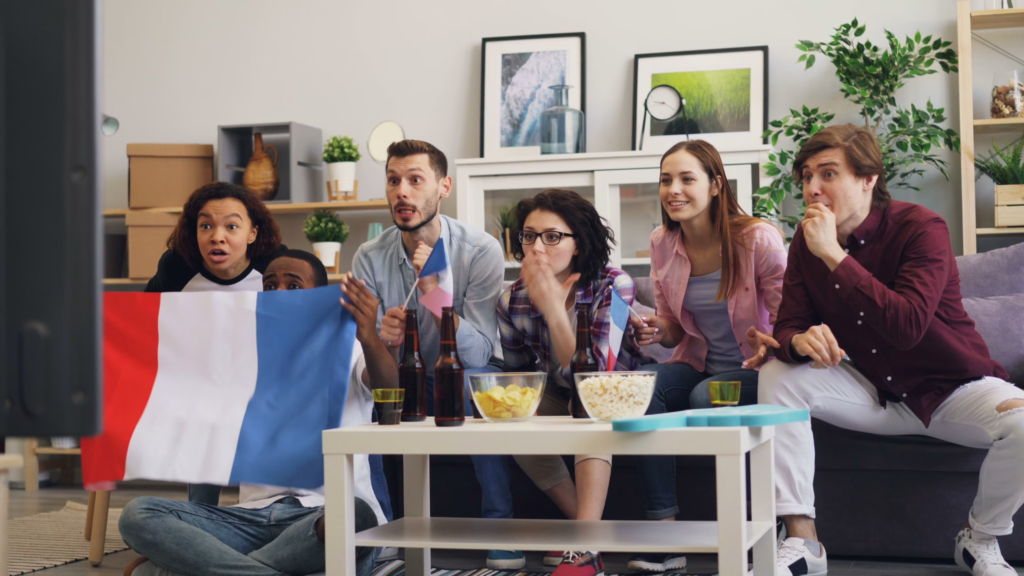
From chants to calculations
French football culture was never short on passion. The Vélodrome’s noise, the Parc des Princes tifos, the rivalries between Saint-Étienne and Lyon – none of that has faded. What has changed is what happens between matches, in group chats and forum threads where supporters dissect probabilities instead of just replaying highlights. This is not unique to France, but the country’s mix of a centralized football federation, heavy state-run lottery involvement, and a media landscape saturated with statistical punditry has pushed the trend further than in most neighboring markets. Shows on beIN Sports and RMC Sport now feature expected-goals models alongside traditional match analysis, normalizing a vocabulary that used to belong to data scientists.
Why prediction-market thinking took hold
A prediction market works by aggregating dispersed opinions into a single price or probability. Football fandom mimics that process by accident, with no formal exchange behind it. Thousands of supporters independently form views on a match outcome, share them, argue, adjust, and the resulting consensus – whether expressed in betting odds, forum sentiment, or fantasy league picks – often tracks reality better than any single expert’s guess.
Three forces explain why this happened in France specifically:
- Fantasy football saturation. Millions of players manage weekly lineups, forcing them to track form, fitness, and fixture difficulty continuously rather than only on matchday.
- Betting rules loosened up. With ANJ overseeing licensed wagering, talking odds openly stopped feeling like something to hide.
- Newsrooms went deep on numbers. French outlets bet early on analytics writers, so models sit beside the usual reports.
How the informal market actually functions
Unlike a stock exchange, there is no central ledger recording every prediction French fans make. The “market” lives across scattered platforms: Twitter threads, club Discord servers, WhatsApp groups among season-ticket holders, and comment sections under match previews.
| Platform type | Primary signal shared | Update frequency |
| Fantasy league app | Player form and rotation risk | Weekly |
| Club Discord/forum | Injury news, dressing-room rumors | Daily |
| Betting odds comparison sites | Implied probability shifts | Hourly |
| Sports radio call-ins | Tactical predictions, gut reads | Per broadcast |
What ties these fragments together is a shared incentive: being right earns social credibility, and in some cases actual money through fantasy prizes or wagers. That incentive structure is exactly what makes formal prediction markets work, and it explains why fan discourse increasingly self-corrects the way a real market does when new information arrives.
The role of collective error correction
When a club like Lens or Rennes has an unexpectedly strong start to a season, the informal market does not stay fooled for long. Supporters compare the team’s underlying shot quality against its results, flag any gap as unsustainable, and that skepticism spreads through the same channels used for daily discussion.
Why this matters beyond football
The implications stretch past sport. Researchers studying crowd wisdom have long used markets like Iowa’s political futures exchange as evidence that aggregated public judgment can outperform individual experts. French football fandom offers a live, renewing dataset of the same phenomenon, playing out across a population far larger than any lab study could recruit.
What clubs and broadcasters are learning
For clubs and broadcasters, understanding this shift matters commercially too. Content that engages fans as analysts – detailed previews, data-rich graphics, interactive prediction tools – now performs better than highlight reels, because the audience wants to reason through outcomes rather than simply watch them unfold.
What comes next for supporter culture
None of this replaces the emotional core of following a club. Nobody sings in the stands because their expected-goals model came out favorably. But the analytical layer underneath the passion is now permanent, woven deeply into how French fans talk, argue, and celebrate.
The next generation of supporters is growing up treating a match preview and a probability estimate as inseparable. Whether that produces sharper fandom or simply a new anxiety – checking odds the way one checks a stock ticker – is still open. What is clear is that French fans, without any central authority organizing them, have built something that behaves like a market: noisy, occasionally wrong, but self-correcting, and hard to ignore.